Description
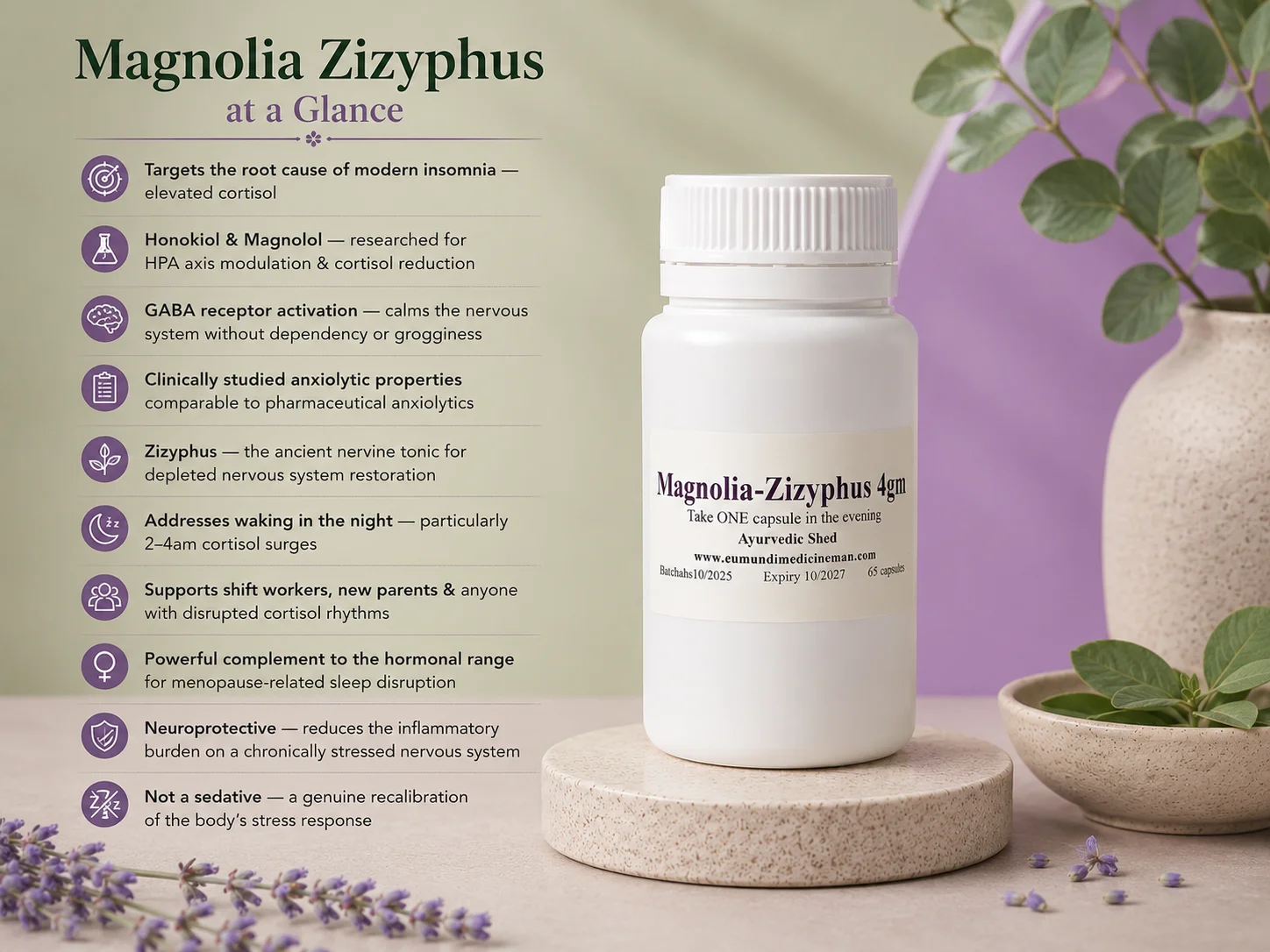
The Real Reason You Can’t Sleep
Most sleep supplements address the symptom — melatonin to force drowsiness, antihistamines to sedate, herbal blends that make you feel groggy without actually restoring anything. None of them address the root cause. Because the root cause is not a melatonin deficiency. In the vast majority of cases of modern insomnia, the root cause is elevated cortisol.
Cortisol is the body’s primary stress hormone — produced by the adrenal glands, governed by the HPA axis (the hypothalamic-pituitary-adrenal system), and designed to follow a precise daily rhythm. Cortisol should peak in the early morning to wake you, gradually decline through the day, and be low by evening so that melatonin can rise and sleep can come. It is an elegant, well-designed system.
The problem is that chronic stress, poor sleep habits, excessive screen time, irregular routines, shift work, and the sustained adrenal demand of modern life completely disrupt this rhythm. Cortisol stays elevated into the evening and night — blocking melatonin production, keeping the nervous system in a state of alert, making the mind race, the body tense, and genuine rest physiologically impossible regardless of how exhausted you feel.
Until you address the cortisol, nothing else will fully work.
This is precisely what Magnolia bark does — and the research on how it does it is extraordinary.
The Science of Magnolia Bark — Honokiol, Magnolol & the Cortisol Connection
Magnolia bark (Magnolia officinalis) has been used in Traditional Chinese Medicine for over two thousand years for its calming, anxiety-reducing, and sleep-promoting properties. For most of that time, its mechanisms were understood intuitively rather than biochemically. Modern research has now identified the specific compounds responsible — and what it has found is remarkable.
The two primary bioactive compounds in Magnolia bark are honokiol and magnolol — polyphenolic compounds with a growing body of peer-reviewed research behind them.
Research has demonstrated that honokiol and magnolol directly modulate the HPA axis — the central system that governs cortisol production. Studies have shown measurable reductions in cortisol levels following Magnolia bark supplementation, along with reduced adrenal reactivity to stress. This is not a sedative effect. This is a recalibration of the stress response system itself — allowing the body to produce appropriate cortisol when it is genuinely needed, and to switch it off when it isn’t. For the person who wakes at 3am with a racing heart and an anxious mind, this mechanism is directly relevant.
Both honokiol and magnolol have demonstrated significant activity at GABA-A receptors — the same receptor system targeted by benzodiazepine medications, but through a different binding mechanism that produces calming effects without the dependency, tolerance, or morning grogginess associated with pharmaceutical anxiolytics. GABA is the nervous system’s primary inhibitory neurotransmitter — the signal that tells neurons to quieten down. When GABA activity is insufficient, the nervous system cannot settle, anxiety persists, and sleep remains elusive. Magnolia bark supports GABA activity naturally and without the risks of pharmaceutical intervention.
Research published in multiple journals has investigated honokiol specifically for its anxiolytic properties — finding effects comparable to diazepam in animal studies, without the sedative side effects at equivalent doses. For people dealing with the chronic, ambient anxiety that has become so normalised in modern culture — the low-grade unease, the inability to fully relax, the constant background hum of worry — Magnolia bark addresses the neurological drivers of this state directly.
Honokiol has also been studied for its neuroprotective properties — its capacity to protect neural tissue from oxidative stress and inflammatory damage. A nervous system under sustained pressure accumulates inflammatory burden that compounds the anxiety and sleep disruption it is already experiencing. Magnolia bark addresses both the acute presentation and the underlying neural environment simultaneously.
Zizyphus — The Ancient Nervine Companion
Paired with Magnolia bark in this formula is Zizyphus (Ziziphus spinosa / jujube seed) — one of Traditional Chinese Medicine’s most revered nervine tonics, used for centuries specifically for insomnia, anxiety, and the depleted nervous system that results from sustained stress.
Where Magnolia bark works primarily on the cortisol and GABA systems, Zizyphus nourishes the nervous system at a deeper, more tonic level — supporting the production of calming neurotransmitters, reducing the irritability and emotional reactivity that accompany sleep deprivation, and building the nervous system’s long-term resilience. It is specifically indicated for what TCM describes as “heart blood deficiency” — the state of nervous depletion characterised by anxiety, palpitations, poor memory, and the inability to settle into rest even when the body is desperately tired.
Together, Magnolia and Zizyphus address the full picture — Magnolia switching off the cortisol-driven activation that prevents sleep from coming, Zizyphus nourishing and restoring the depleted nervous system that underlies the whole presentation.
Who This Formula Is For
The shift worker whose sleep-wake cycle has been chronically disrupted and whose adrenals have never fully recovered. The new parent running on fragmented sleep whose nervous system has been in emergency mode for months. The executive whose mind will not disengage from the day’s demands when their head hits the pillow. The person who falls asleep easily but wakes at 3am unable to get back to sleep — one of the most reliable signs of elevated cortisol in the second half of the night. The menopausal woman whose declining progesterone has removed a key buffer against cortisol activity, making sleep suddenly and profoundly disrupted. The anxious person who simply cannot remember what it felt like to feel genuinely calm.
This formula is for anyone whose relationship with sleep has been disrupted by the stress and pace of modern life — which, in clinical experience, is most of us.
What Magnolia Zizyphus Addresses
- ✔️ Elevated cortisol — the primary driver of modern insomnia, addressed at its hormonal source
- ✔️ Inability to fall asleep — GABA receptor activation reduces the nervous system activation that keeps the mind alert when the body needs to rest
- ✔️ Waking in the night — particularly the 2–4am cortisol surge that is one of the most common and most disruptive sleep presentations
- ✔️ Anxiety and racing mind — honokiol’s anxiolytic properties calm the neurological state that underlies both anxiety and sleep disruption simultaneously
- ✔️ Adrenal tension and chronic stress — HPA axis modulation supports the body’s capacity to produce and clear cortisol in a healthy rhythm
- ✔️ Nervous system depletion — Zizyphus rebuilds the tonic nervous system vitality that sustained stress erodes
- ✔️ Shift work and irregular sleep cycles — clinically observed as one of the most responsive presentations to this formula
- ✔️ Menopause-related sleep disruption — addresses the cortisol dimension of hormonal sleep disruption as a powerful complement to the hormonal range
Directions
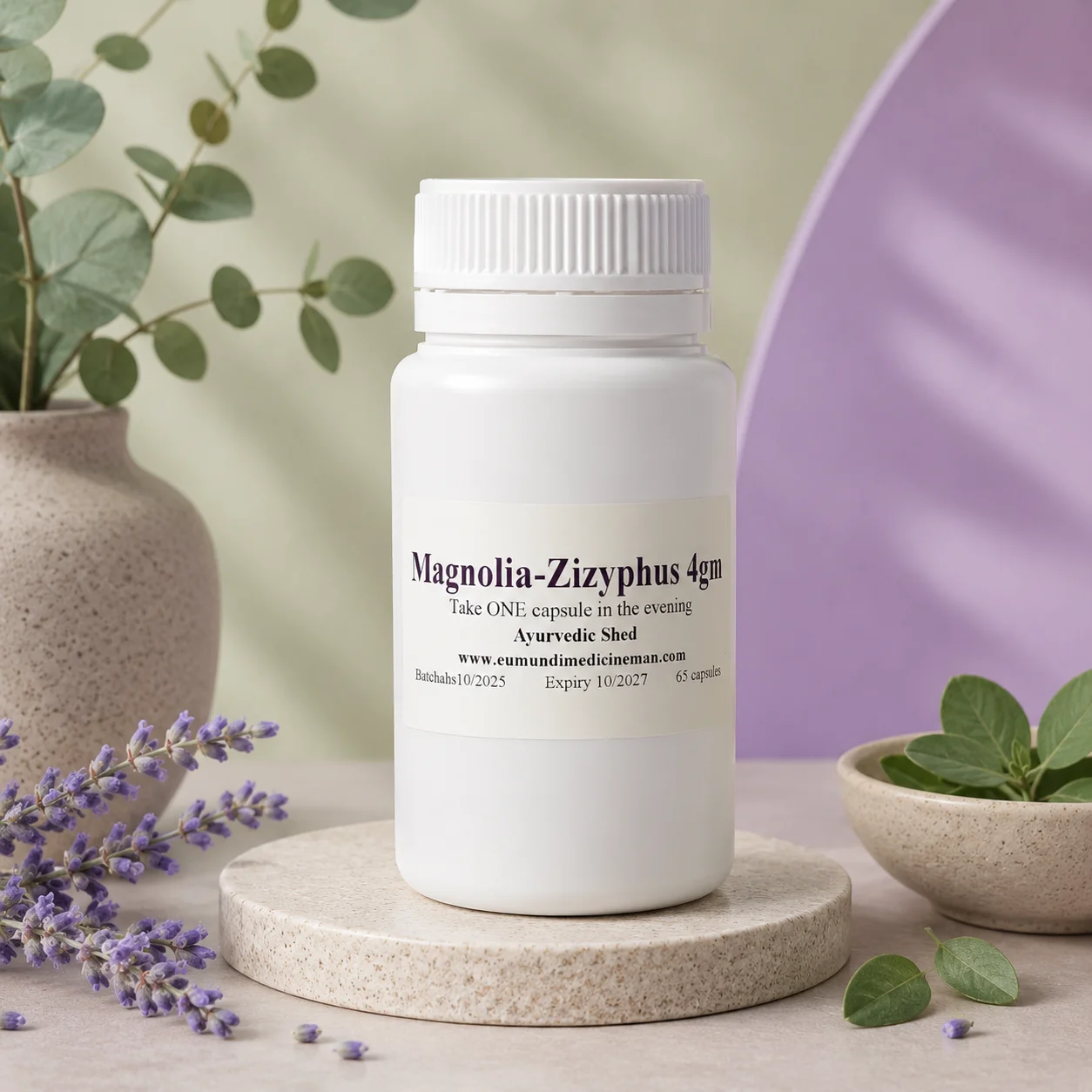
Take 1–2 capsules approximately 30 minutes before bed with warm water. Allow the formula to work consistently — the nervine and cortisol-regulating effects deepen over time with regular use, though many people notice a meaningful shift in sleep quality from the first night.
Practitioner Heritage
I am proud to offer this formula from the Eumundi Medicine Man range — a trusted Ayurvedic practitioner and dispensary on the Sunshine Coast for over 20 years. Magnolia Zizyphus has been one of the most consistently effective formulas in their clinical practice — particularly for the presentation that has become so common in modern life: the person who is exhausted but cannot sleep, wired but cannot rest, depleted but cannot switch off. Twenty years of clinical observation has confirmed what the research is now beginning to explain.
These practitioner substances are not approved by the Therapeutic Goods Administration (TGA). This product is not intended to diagnose, treat, cure, or prevent any disease.