Description
The Sunshine Problem — Why Deficiency is Endemic
In modern Australian life, despite the abundance of sunshine, most people do not meet these conditions consistently. Office hours, indoor work, protective clothing, high-SPF sunscreen, and the simple reality of busy lives spent predominantly inside mean that D3 production is chronically insufficient for a large proportion of the population.
The result is a quiet, pervasive deficiency that standard blood tests frequently under-report — because the reference ranges used by most pathology labs reflect average population levels, not optimal levels. Being “within range” does not mean you have enough. It means you have as much as everyone else — most of whom are also deficient.
Supplementing with a reliable, consistent daily dose of D3 is one of the simplest, most evidence-supported, and most far-reaching interventions available in preventive health. This is not fringe thinking. It is increasingly the clinical consensus among the world’s most rigorous integrative practitioners.
What Vitamin D3 Actually Does
Immune System — The First and Most Critical Layer
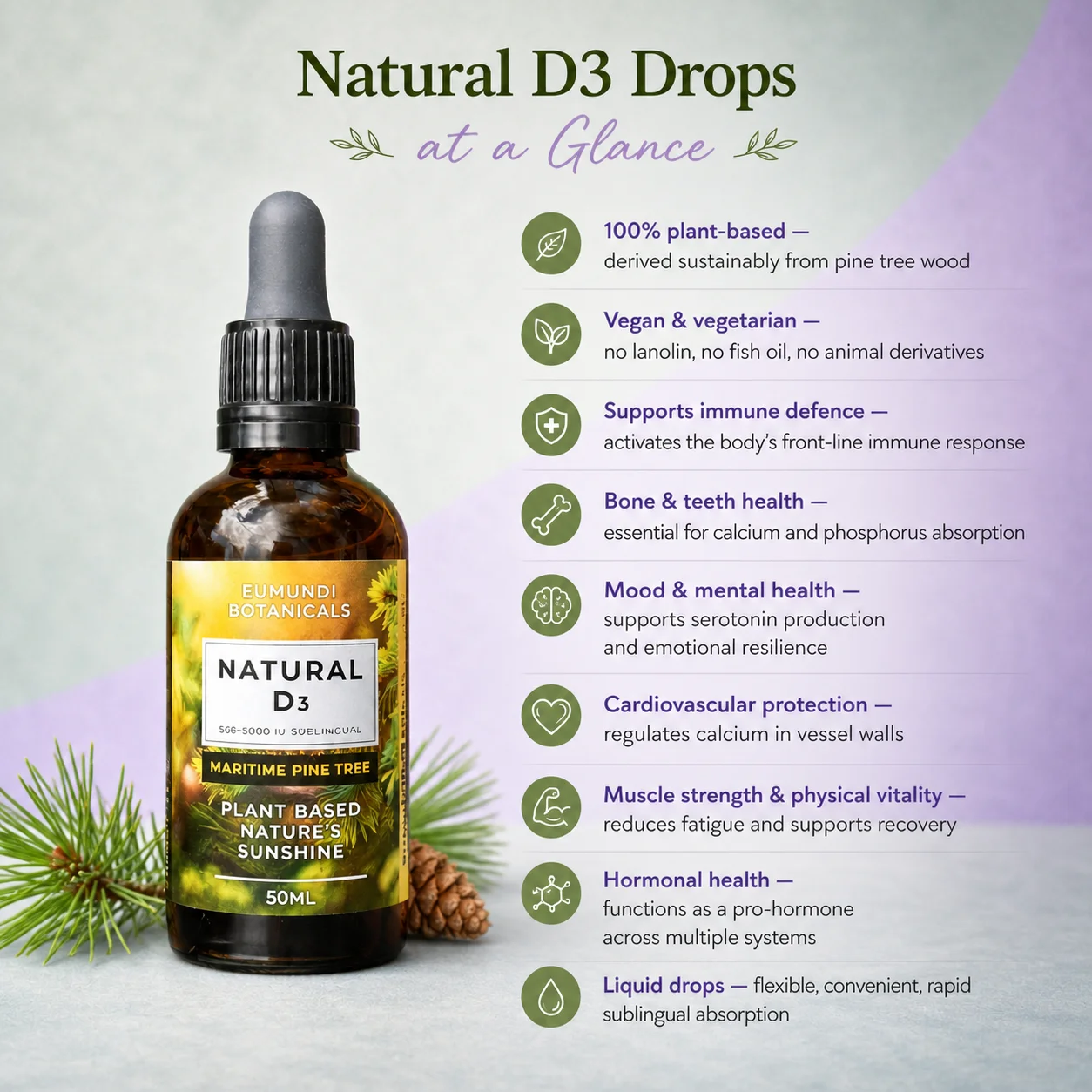
Vitamin D3 is directly involved in the activation and regulation of the immune system’s front-line defences. Immune cells — T cells, B cells, macrophages — all carry receptors for D3, which means adequate D3 is a prerequisite for a properly functioning immune response. Deficiency leaves the immune system sluggish, reactive, and unable to mount an effective defence against viruses, bacteria, and the chronic low-grade inflammation that underlies so many modern diseases.
World oncologists including Dr Paul Marik have been outspoken about D3’s role in immune regulation and its potential relevance to cancer prevention — making this one of the most significant and yet most overlooked areas of D3 research. The science here is not peripheral. It is profound.
Bone & Teeth Health — The Role Most People Know, But Incompletely
D3 is essential for the absorption of calcium and phosphorus — the minerals that build and maintain bone density and tooth strength. Without adequate D3, calcium consumed through diet and supplements cannot be properly absorbed, regardless of how much is taken. This is the missing piece in so many bone health programmes — not more calcium, but the D3 that makes calcium bioavailable. Osteoporosis, dental decay, and stress fractures all have a D3 deficiency dimension that is frequently overlooked.
Mood, Mental Health & Serotonin
Vitamin D3 directly supports the production of serotonin — the neurotransmitter that governs mood stability, emotional resilience, and the sense of wellbeing that makes life feel manageable. The strong correlation between D3 deficiency and depression, seasonal affective disorder, anxiety, and general low mood is one of the most consistent findings in nutritional psychiatry. For anyone navigating mental health challenges, optimising D3 is one of the most accessible and evidence-supported first steps available.
Cardiovascular Health
D3 plays a direct role in regulating calcium deposits within blood vessel walls — a key mechanism in the prevention of arterial hardening and cardiovascular disease. It supports healthy blood pressure, reduces inflammatory markers associated with heart disease, and helps maintain the structural integrity of the cardiovascular system. Given that cardiovascular disease remains Australia’s leading cause of death, this is not a minor benefit.
Muscle Function & Physical Vitality
D3 receptors are present in muscle tissue throughout the body. Adequate D3 is necessary for proper muscle contraction, strength, and recovery. Deficiency manifests as persistent muscle weakness, fatigue that doesn’t resolve with rest, and the kind of physical fragility that many people assume is simply part of ageing. Restoring D3 levels frequently produces a noticeable and relatively rapid improvement in physical energy and strength.
Hormonal Health
D3 functions as a pro-hormone — directly influencing the production and regulation of a range of other hormones in the body. Its relationship with testosterone, oestrogen, insulin, and thyroid function makes it a foundational player in hormonal health for both men and women. For anyone already working with the hormonal support products in this range, optimising D3 is a powerful complementary step.
Why Plant-Based & Pine-Derived Matters
Traditional D3 supplements are almost universally sourced from lanolin — the waxy secretion from sheep’s wool — or from fish oil. For vegans, vegetarians, and those seeking to reduce animal product consumption for ethical or environmental reasons, these sources present a real problem. Until recently, there was no viable plant-based alternative.
This formula represents a genuine breakthrough — D3 sourced from pine tree wood through a sustainable, ethical extraction process that produces identical D3 to the animal-derived form, with none of the ethical compromise. For the yoga community, plant-based practitioners, and anyone committed to conscious, sustainable living, this is the D3 they have been waiting for.
Same essential vitamin. Same bioavailability. Zero animal derivatives.
Directions
Take as directed — liquid drops for flexible, convenient dosing. Can be taken sublingually (under the tongue) for rapid absorption, or added to water or food. Best taken consistently as part of a daily wellness routine, ideally in the morning with a meal containing healthy fats to maximise absorption.
D3 is a fat-soluble vitamin — taking it alongside a meal containing good fats significantly enhances uptake and utilisation.
Practitioner Heritage
I am proud to offer this formula from the Eumundi Medicine Man range — a trusted Ayurvedic practitioner and dispensary on the Sunshine Coast for over 20 years. The Medicine Man’s commitment to sourcing and offering only what is genuinely effective, ethically produced, and clinically grounded is reflected in every product in this range — and this plant-based D3 is no exception. It represents both a commitment to optimal health outcomes and to the conscious, sustainable values that define this community.
These practitioner substances are not approved by the Therapeutic Goods Administration (TGA). This product is not intended to diagnose, treat, cure, or prevent any disease.