






Wellness Image

Experience Transformative Healing Through Your Spine

Restoring ease, connection and vitality by supporting your body’s natural healing intelligence.
Discover the Essentials of Spinal Flow Healing

What is Spinal Flow?

What is the Spinal Flow Technique?

Gentle spinal therapy session

The Spinal Flow Technique is a gentle, hands-on modality that works with the nervous system through specific contact points along the head and spine.

It is based on a simple understanding:
Your body is constantly communicating with itself through the nervous system.
When that communication becomes disrupted — by physical injury, emotional stress, or chemical overload — the body adapts by tightening, guarding, and compensating. Over time these adaptations can show up as pain, tension, fatigue, emotional overwhelm, reduced mobility, or a general sense of disconnection from yourself.

Spinal Flow does not attempt to force change or manually correct the body.
Instead, it helps the body recognise areas where protective patterns are being held and gently encourages them to release.

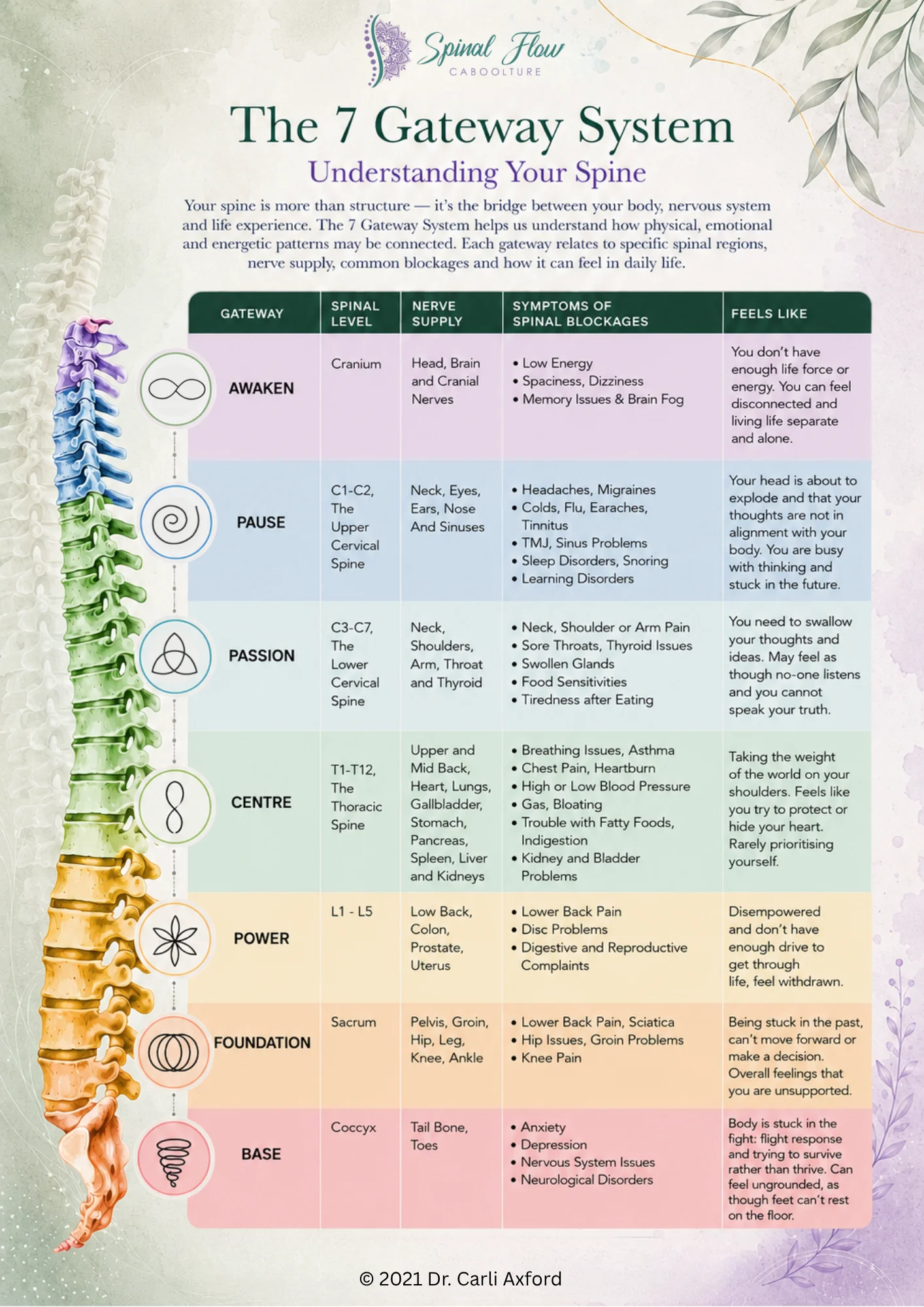
The technique works with seven primary gateways of the spine and 33 access points that relate to different regions of neurological function. Through light contact, the practitioner communicates with the nervous system rather than manipulating structure.

Pain or postural defences are viewed as information — a signal that the body is working hard to adapt.
By improving the flow of communication between the brain and body, the system can begin reorganising itself in a more efficient and less protective way.

Many people experience a visible wave-like motion during sessions, known as the spinal wave.
This is not something applied to you — it is something your body generates as tension releases and the nervous system shifts toward safety and regulation.

Over time the spinal wave can evolve through three stages:

Breathing Wave – settling and nervous system regulation
Sensing Wave – increased awareness and connection within the body
Moving Wave – coordinated release and greater ease of movement

The intention of care is not to “fix” the body, but to help it regain adaptability, resilience and flow.

People commonly seek Spinal Flow support for:

• Persistent aches and stiffness
• Headaches and migraines
• Sciatic and nerve discomfort
• Stress and overwhelm
• Low energy and fatigue
• Digestive tension
• Anxiety and emotional strain
• Hormonal transitions
• Recovery from injury
• Support alongside medical care

Every person responds differently — the focus is always on improving nervous system function rather than treating a diagnosis.

Wellness Image

Who Created Spinal Flow?

The Spinal Flow Technique was developed by chiropractor Dr Carli Axford after years of clinical practice observing consistent patterns in how the body releases stored stress.

While Spinal Flow shares foundations with chiropractic, craniosacral and osteopathic principles, Spinal Flow differs in its approach — it does not rely on force, adjustments, or structural correction. Instead, it works through neurological communication and the body’s inherent capacity to reorganise when it feels safe.

How Does Spinal Flow Work?

Calm therapy environment

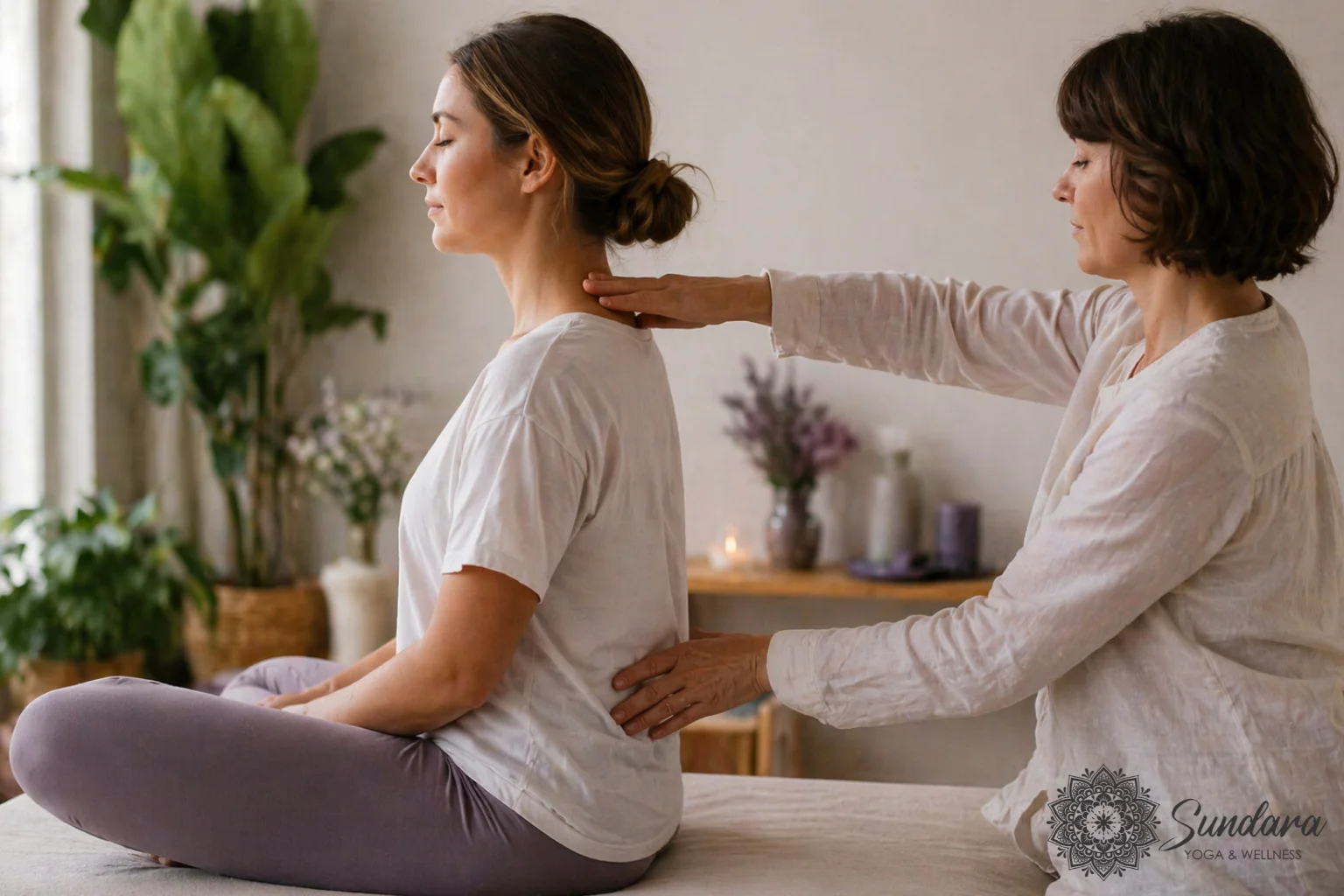
During a session, I make gentle contacts at specific access points along your spine and head while you rest fully clothed on a table.

These contacts signal safety to the nervous system.

As the brain recognises it no longer needs to guard certain areas, muscles soften, breathing deepens, and a spinal wave may begin to move through your body.

This process helps shift the body out of chronic fight-or-flight patterns and toward a regulated state where repair, digestion, immune function and emotional processing can occur more efficiently.

Rather than me doing something to your body, your body responds from within.

People often report:

  • A feeling of unwinding tension
  • Warmth or movement through the spine
  • Emotional release
  • Deep relaxation
  • Clearer breathing
  • Improved mobility
  • A greater sense of calm and presence

Changes may be subtle at first and then build as the nervous system learns a new baseline of ease.

The outcome is not only physical relief, but often a renewed sense of connection — to your body, your breath, and your capacity to respond to life rather than brace against it.

The work is incredibly gentle, yet the shifts can be profound because they come from your own system reorganising itself.

Wellness Image

The seven gateways of the spine are the primary assessment framework used in the Spinal Flow Technique. Each gateway relates to specific regions of the body and patterns of nervous system response. During sessions, I use these gateways as a way of listening to how your body has adapted to physical, emotional and chemical stress over time.

When an area of the spine is under protective tension, the nervous system may not communicate as efficiently with the tissues it supplies. This can contribute to symptoms such as discomfort, restricted movement, fatigue, organ stress, or heightened emotional reactivity.

Pain is often the first signal — but it is only one form of communication. Rather than focusing only on where symptoms appear, we look at why the body is holding protection there.

The gateways give us a clear language to understand patterns in your body and track changes as your system becomes more regulated and adaptable.

My Approach

I don’t see healing as something that is given to you.

I see it as something that emerges when your body finally feels safe enough to let go of what it has been holding.

Many people arrive after trying numerous therapies, often feeling frustrated with their body or disconnected from it. My role is not to push change, but to listen — to the subtle patterns your nervous system has developed to protect you — and support your system in finding a different way.

During sessions I work slowly and attentively, allowing your body to guide the pace. Some people experience noticeable movement, others feel deep stillness. Both are valid responses; the nervous system releases in its own timing.

I am particularly interested in how physical tension, emotional experience and life stress are stored together in the body. When the spine begins to move more freely, people often notice not only physical ease but also clearer thinking, calmer emotions and a greater sense of being present in their life.

Care is individualised. We are not chasing symptoms — we are improving the way your body adapts and regulates.

My intention is to create a space where you can stop bracing, stop pushing, and allow your system to reorganise from within.

Healing does not come from force.

It comes from connection, safety and consistency.

Beginning Your Care

If you feel drawn to explore Spinal Flow, the first step is simply understanding how your body is currently functioning.

I offer two ways to begin, depending on how much depth you would like from the start.

Mini Initial Consultation

A gentle starting point

This shorter visit is designed to give you an overview of your spine and nervous system patterns.

During this session I will:

  • review a brief health history
  • assess the spinal gateways
  • explain what your body is showing
  • answer your questions

This appointment is ideal if you would like clarity before deciding whether ongoing care feels right for you.

Complete Initial Assessment

A comprehensive foundation

This extended consultation allows us to look more deeply at your health history and how your body has adapted over time.

We will:

  • go through a detailed health questionnaire
  • assess posture and movement patterns
  • evaluate spinal gateways and areas of protection
  • discuss how these relate to your experiences and symptoms
  • create an appropriate care plan moving forward

This visit provides a clear baseline so changes can be understood and tracked as your body reorganises.

After your initial visit, sessions are gentle and individualised. Some people choose regular care for a period of time, while others prefer a slower rhythm — we decide together what feels realistic and supportive for you.

You are always welcome to ask questions before booking. There is no pressure — only an invitation to explore whether this approach feels right for your body.

Take your time reading through the information below. When you feel ready, you’re welcome to book your initial visit.

Frequently Asked Questions

What does a Spinal Flow session feel like?

Spinal Flow is very gentle. Light contacts are made at specific points along the head and spine to communicate with the nervous system.

Most people experience deep relaxation and a sense of settling in the body. You may notice warmth, subtle movements, breathing changes, emotional release, or simply a quiet stillness similar to meditation. Every response is normal — your body releases in its own way.

You remain fully clothed during sessions.

What happens during a session?

You will lie comfortably on a treatment table (usually face-down). I make gentle contacts at spinal access points while you rest and focus on your breathing and body awareness.

There is no manipulation, cracking or force. The session allows the nervous system to shift out of protective tension and into a more regulated state.

Sessions are typically 30 minutes.

What is the spinal wave?

Sometimes the body begins a natural wave-like motion during a session. This is not something being done to you — it is your nervous system releasing stored tension and reorganising movement patterns.

Some people experience clear movement, others feel internal shifts only. Both are equally valid.

How often will I need sessions?

Everyone is different.

Some people notice changes quickly, while others require consistency for the body to unwind long-held patterns. We decide together what rhythm feels realistic and supportive for you.

The intention is not endless treatment, but helping your body build a more stable baseline so it needs less support over time.

Who is Spinal Flow suitable for?

Spinal Flow is gentle and adaptable for all ages.

People often attend for tension, discomfort, stress, fatigue, emotional overwhelm, or simply to feel more connected in their body. You do not need a diagnosis to benefit.

What is a duo session?

A duo session is when two people attend together and take turns receiving care in the same room. Many people enjoy the relaxed atmosphere and shared experience.

What if I can’t lie face-down?

The technique can be performed in different positions — side-lying, seated or modified support — so comfort and accessibility can always be accommodated.

Do you offer online sessions?

No — Spinal Flow is a hands-on modality.

Can children attend?

Yes. Children can receive sessions and often respond very quickly due to their adaptable nervous systems.

Are health fund rebates available?

Spinal Flow is not currently covered by private health insurance rebates.

Does it hurt?

No. The contacts are extremely light. Many people are surprised by how much change can occur from such gentle input.

Do I need to believe in it for it to work?

No belief is required. The process is based on nervous system responses — your body simply responds to safety and appropriate input.

Can I still receive medical care?

Yes. Spinal Flow does not replace medical treatment. It is often used alongside other healthcare approaches as supportive care.


How Spinal Flow Supports Natural Healing

Your Body Isn’t Broken — It’s Asking to Be Heard Have you tried everything — stretches, supplements, appointments, treatment plans — and still feel stuck? Maybe your results came back “normal.” Maybe you’ve been told it’s just stress. But your body still feels tense, tired, overwhelmed, or in pain. This guide explores a different perspective. What if your symptoms aren’t signs of malfunction — but messages from your nervous system? Inside this downloadable guide, you’ll discover: Why traditional symptom-focused treatments often miss the deeper cause How stored stress can live in the spine and nervous system What makes Spinal Flow™ […]

previous arrow
next arrow
How Spinal Flow Supports Natural Healing
Sciatica Through the Nervous System: A Spinal Flow Companion
Healing Happens: Supporting Your Nervous System with Flow, Nourishment & Awareness
Finding Relief from Chronic Headaches: Listening to What the Body Is Saying
You’re Not Stuck — You’re Holding: How Spinal Flow Helps Release What You Can’t Let Go
Give your children the foundation for a thriving life – How Spinal Flow can unlock Child’s Potential
The Missing Piece: Why So Many Spectrum Families Are Turning to Spinal Flow
Your Body Remembers How to Heal: The Power of Spinal Flow Self-Healing and Support
previous arrow
next arrow

Beginning Your Care

If you feel drawn to explore Spinal Flow, the first step is simply understanding how your body is currently functioning.

Schedule Your Initial Visit

Fees

A gentle heads up from Spinal Flow Caboolture:

Effective immediately I will be introducing Family Session Pricing, making Spinal Flow more accessible for families to heal together. From 1st June, 2026 I will also be updating our general pricing to better reflect the depth and care that goes into every session.

If you’ve been considering a package, now is a lovely time to lock in your current rate before 31st May 2026. Packages purchased before this date will be honoured at current pricing.


CURRENT PRICING — available until 31st May 2026

Initial Visits

  • Mini Initial Consultation — $85
  • Mini Initial Consultation (child) – $80
  • Complete Initial Assessment — $150

30-Minute Sessions

  • Single Session — $70
  • 6-Session Package — $390 ($65 each)
  • 12-Session Package — $720 ($60 each)

45-Minute Sessions

  • Single Session — $105
  • 6-Session Package — $570 ($95 each)
  • 12-Session Package — $1,020 ($85 each)
  • Duo Session — $110
  • Children (12 years and under) — $50
— NEW — Family Pricing

  • Family Duo — 1 adult + 1 child — $110
  • Family Trio — 2 adults + 1 child — $175
  • Family Trio — 1 adult + 2 children — $155


NEW PRICING FROM 1ST JUNE 2026

Initial Visits

  • Mini Initial Consultation (adult) — $100
  • Mini Initial Consultation (child) — $80
  • Complete Initial Assessment — $150 (no change)

30-Minute Sessions

  • Single Session — $80
  • 6-Session Package — $430 ($71.67 each)
  • 12-Session Package — $800 ($66.67 each)

45-Minute Sessions

  • Single Session — $120
  • 6-Session Package — $650 ($108 each)
  • 12-Session Package — $1,160 ($96.67 each)
  • Duo Session — $120
  • Children (12 years and under) — $55

All current packages and prepaid sessions will be honoured at the rate they were purchased. Thank you for your continued trust and support — it means the world to me.

Please note that session packages are offered with agreed conditions of use. We’re happy to talk through what feels realistic for your care journey when you’re ready to commit.

Cash payments always welcome!! Ask us about pricing.
Wellness Image
© Copyright Sundara Yoga 2020. All rights reserved